A place to cross over
Long before Seattle, the Duwamish people had a winter village near what is now Pioneer Square, known as Dzidzilalich, "a place to cross over." American settlers arrived in 1852, and the few blocks of tideflat and hillside by the bay became the city's first downtown.
The original Skid Road
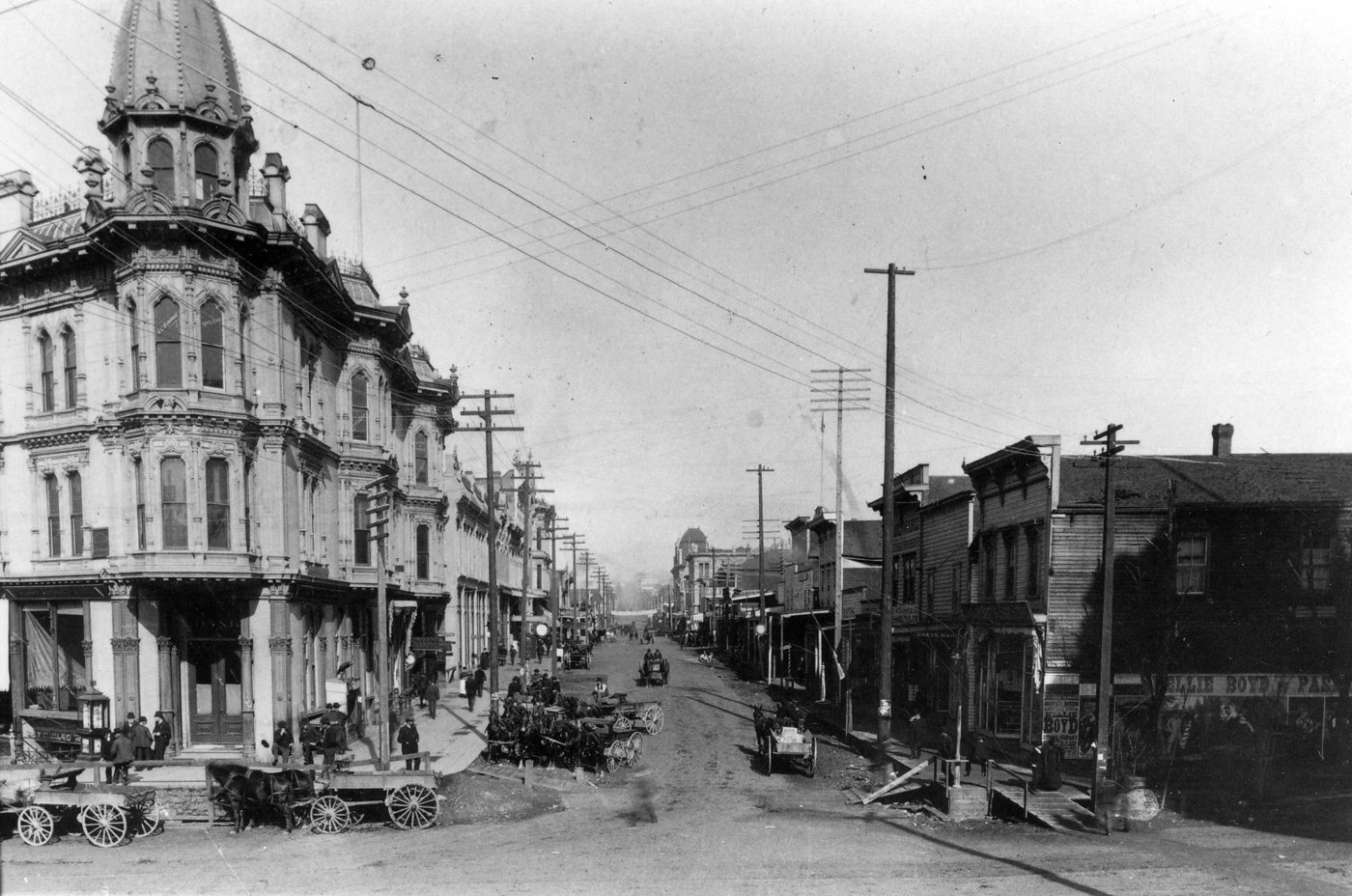
Henry Yesler built a steam sawmill on a pier at the foot of today's Yesler Way, and logs were skidded down the steep hill to it. The street was first called Mill Street, but everyone knew it as Skid Road. Decades later, as the area wore down, the name came to mean a down-and-out part of town, and "skid road," later "skid row," spread across the country.
The fire
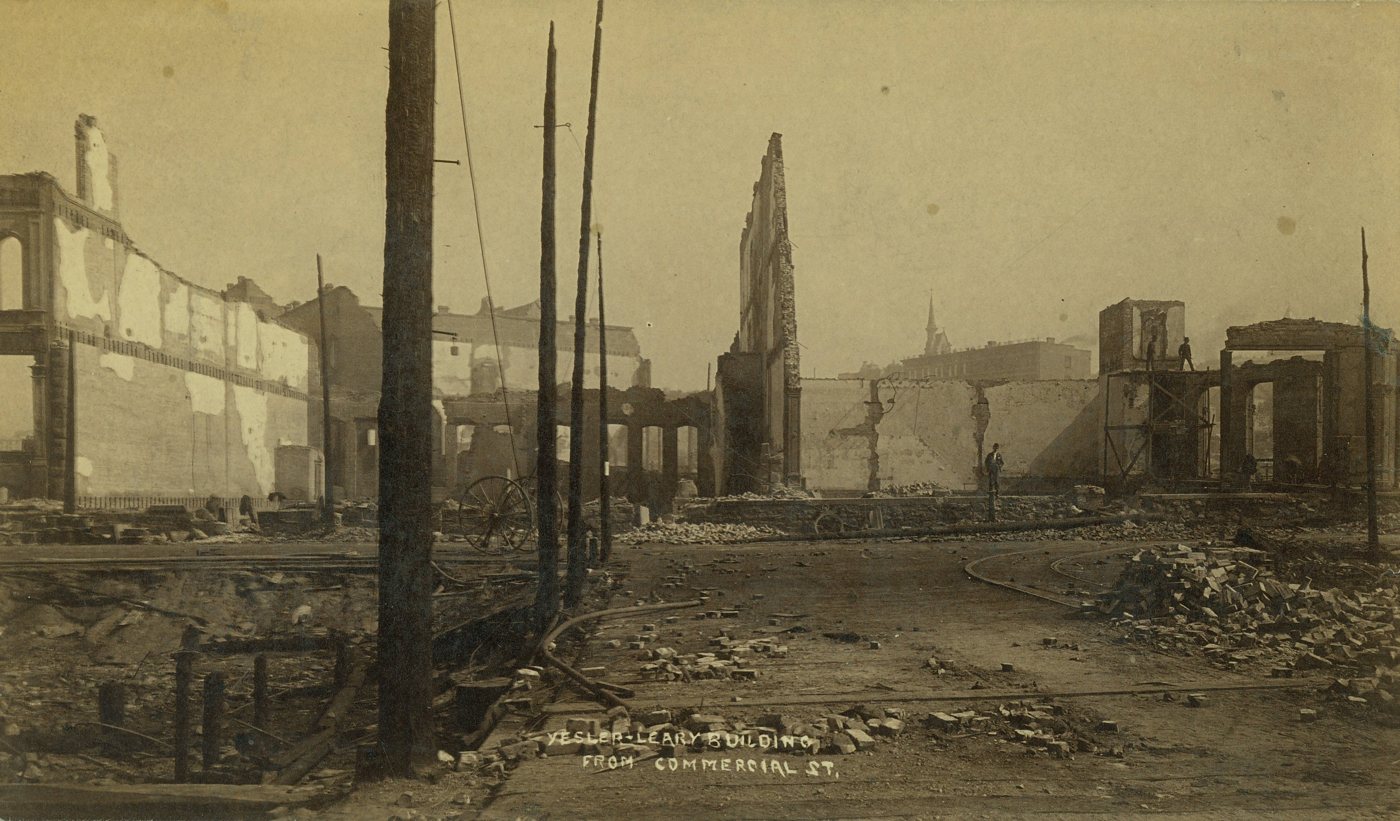
On the afternoon of June 6, 1889, a pot of glue boiled over in a woodworking shop and set off the Great Seattle Fire. The mostly wooden downtown burned, roughly 30 blocks of it, including nearly all of what is now Pioneer Square.
The city rebuilt fast, and this time in brick and stone. Much of the new district was designed by one architect, Elmer Fisher, which is why the blocks have such a consistent look. His Pioneer Building, finished in 1892, still anchors the square.
Raising the streets
Old Seattle had a drainage problem. It was built partly on filled tideland, it flooded, and at high tide the sewers could back up. So after the fire the city decided to raise the streets, in places one to two stories, using retaining walls and fill.
Building owners did not wait for the new grade. They rebuilt at the old level, so for a few years the new streets ran above the old sidewalks, and shoppers climbed ladders to get between them. Eventually the gaps were roofed over with new sidewalks, set with small glass skylights called vault lights that let daylight in below and have since turned purple with age. The old ground floors became basements, and the buried sidewalks became what is now called the Seattle Underground.
Gold rush boomtown
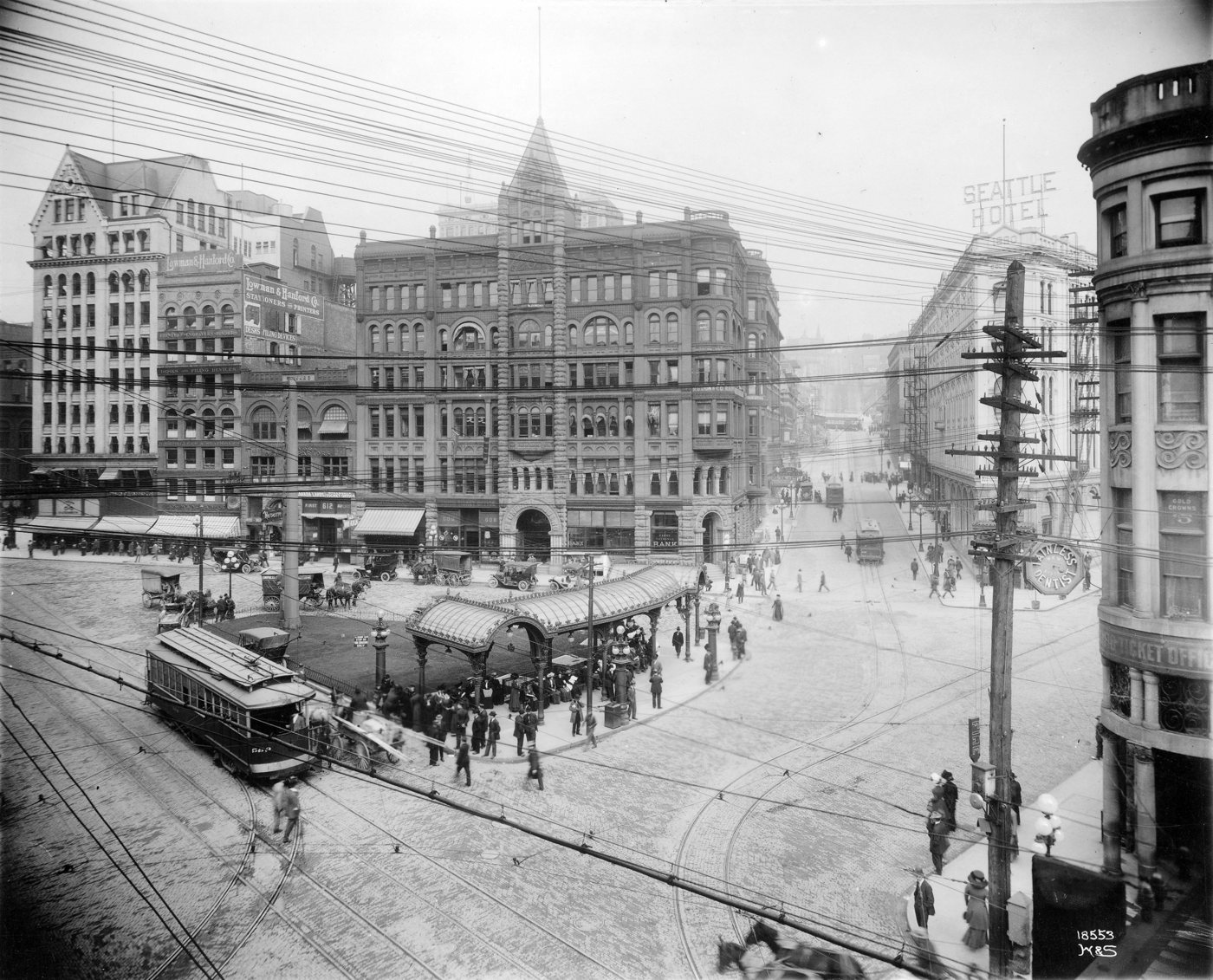
On July 17, 1897, the steamship Portland docked in Seattle carrying more than a ton of gold from the Klondike, and the city became the outfitting stop for tens of thousands of hopeful prospectors heading north. Pioneer Square boomed. The Pioneer Building alone housed 48 mining companies, and hotels like the Cadillac rented rooms to gold rushers for 25 to 50 cents a night.
Decline and a rescue
After the gold rush, downtown drifted north. The Smith Tower opened in 1914, for years the tallest building west of the Mississippi, but even it could not hold the business district here. Pioneer Square slid into decades of decline, and by the 1960s some of its old buildings were coming down for parking.
Two things helped turn it around. In 1965 newspaper columnist Bill Speidel started the Underground Tour, after a short item in the Seattle Times brought him hundreds of letters, and the tours built public support for saving the neighborhood. In 1970, Pioneer Square became a national historic district and Seattle's first local preservation district.
Pioneer Square today
Today the district covers about 88 acres of brick and stone blocks between downtown and the stadiums. It has galleries, old taverns and Occidental Park, and on game days it fills with fans headed to the ballpark and Lumen Field. The Klondike Gold Rush National Historical Park has a free museum in the old Cadillac Hotel, telling the story of Seattle's gold rush years.
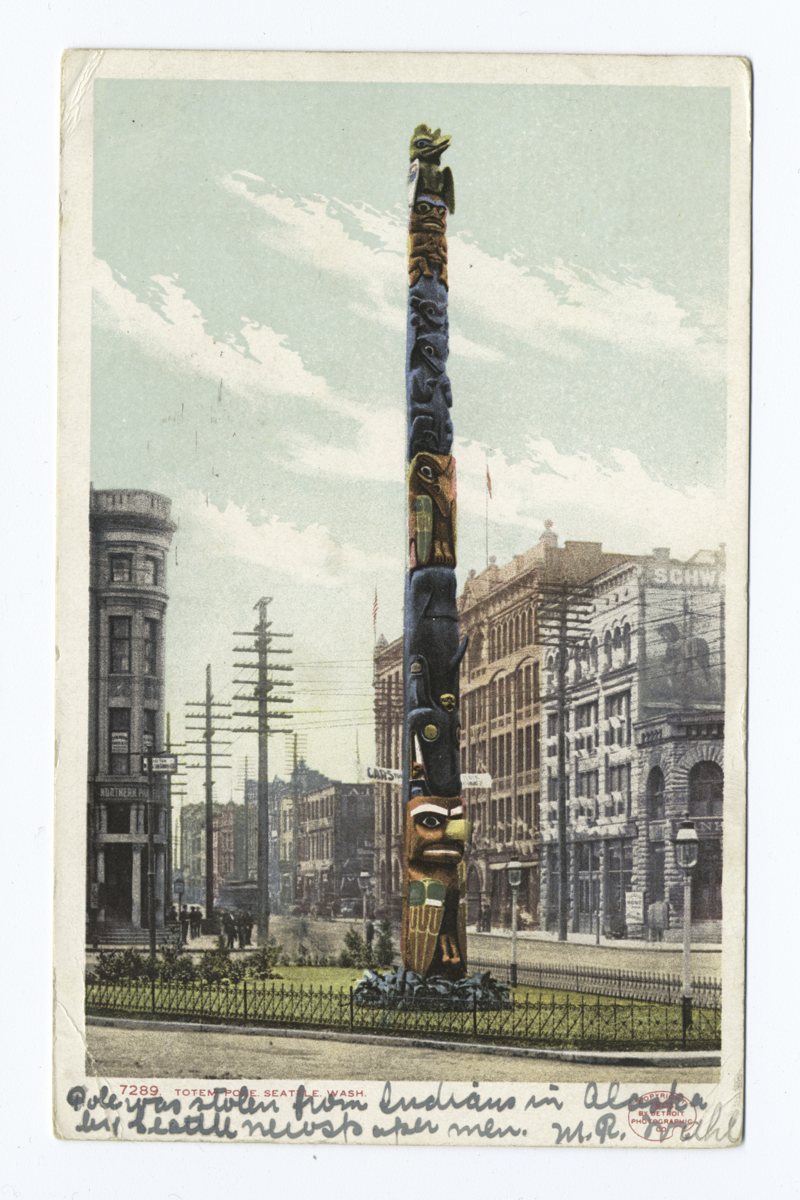
The totem pole in Pioneer Place has its own story. In 1899 a group of prominent Seattle businessmen on a newspaper-sponsored tour of Alaska took the original pole from a Tlingit village on Tongass Island and brought it home as a souvenir. The Tlingit demanded $20,000 and eventually settled for $500. After an arson fire badly damaged the pole in 1938, Tlingit carvers, descendants of the original carvers, made the replica that has stood in the square since 1940.
Our Seattle drive takes in downtown, the Space Needle, Pioneer Square and the stadiums. Watch for the old brick facades along First Avenue and Yesler Way, and know that under some of those sidewalks, the old city is still there.