An ad for a housing tract
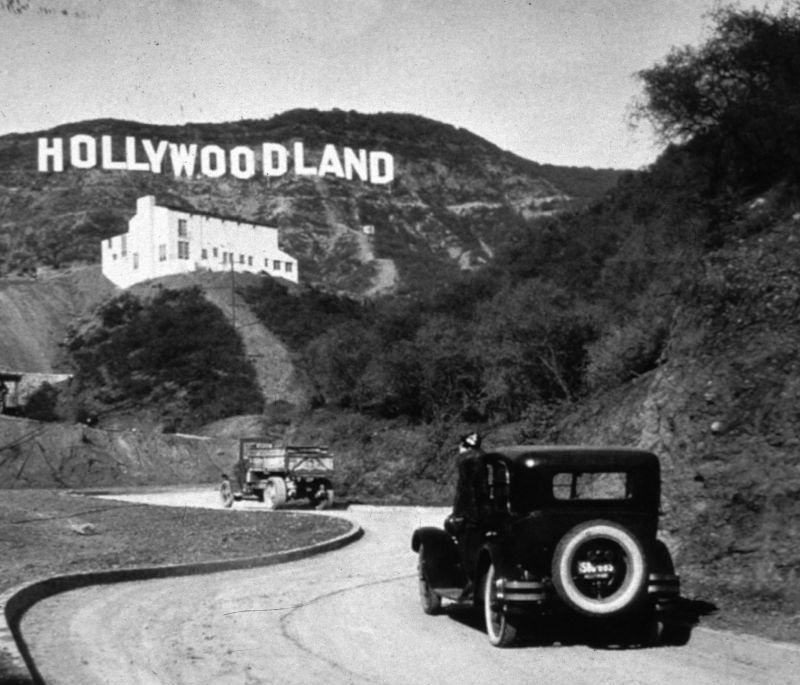
In 1923 a group of investors, including Los Angeles Times publisher Harry Chandler and developers Woodruff and Shoults, began selling lots in a new hillside development at the top of Beachwood Canyon called Hollywoodland. To promote it, they hired the Crescent Sign Company to put the name up on the slope of Mount Lee.
The original sign spelled HOLLYWOODLAND in 13 letters, each about 30 feet wide and 50 feet tall, held up by telephone poles that mules hauled up the hill. Around 4,000 light bulbs lit it at night, flashing HOLLY, then WOOD, then LAND, then the whole word. It cost about $21,000 and was meant to last roughly 18 months.
A caretaker on the mountain
For years a caretaker named Albert Kothe climbed the letters to replace burned-out bulbs. In the early 1940s he was also behind an accident that wrecked the H. By then the sign was already slipping into disrepair.
The sign also carries a sad chapter. In September 1932, Peg Entwistle, a 24-year-old stage actress who had come to Los Angeles hoping to work in films, died at the sign. Her story is still one of the most retold in Hollywood history.
Dropping the LAND
By 1949 some residents were calling the sign an eyesore and the city's parks department wanted it torn down. The Hollywood Chamber of Commerce stepped in and offered to repair it, on one condition: the last four letters came down, so the sign would stand for the whole district of Hollywood rather than one housing tract. The bulbs were not replaced, and the sign has been dark ever since.
The HULLYWO D years
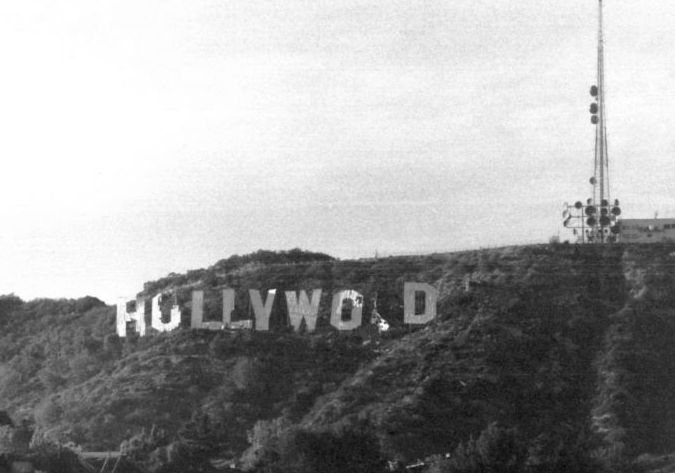
The wood and sheet metal kept weathering. By the 1970s one O had split, another had tumbled down the hill, and arsonists had set fire to the bottom of an L, leaving something closer to "HULLYWO D." The city named it a Historic-Cultural Monument in 1973, but a landmark designation could not hold up rotten letters.
Hefner, Alice Cooper and nine new letters
In 1978, Playboy founder Hugh Hefner hosted a fundraiser at his mansion, and nine donors each paid about $27,777 to sponsor a brand new letter. Alice Cooper took an O in memory of Groucho Marx. Gene Autry took an L, Andy Williams the W, Warner Bros. Records an O, and Les Kelley, founder of the Kelley Blue Book, another L. Hefner's name went on the Y.
The old sign came down in August 1978, and for about three months the hillside sat empty. The replacement went up later that year on a steel frame, with letters 45 feet tall stretching about 350 feet across. The Hollywood Sign Trust was formed the same year to look after it.
HOLLYWEED, CALTECH and other pranks
On New Year's Day 1976, the morning a looser California marijuana law took effect, a Cal State Northridge art student named Danny Finegood and a few friends used about $50 worth of curtains to turn the sign into HOLLYWEED. He reportedly got an A for the project.
Finegood came back several times: HOLYWOOD for an Easter sunrise service at the Hollywood Bowl, OLLYWOOD during the 1987 Iran-Contra hearings and Oliver North's testimony, and OIL WAR in 1990. In 1987, Caltech students covered letters so the hillside read CALTECH, and the sign read HOLYWOOD again for Pope John Paul II's visit. Someone pulled HOLLYWEED one more time on New Year's Day 2017. Today the sign is fenced and watched by cameras, so the prank era is mostly over.
Why it matters
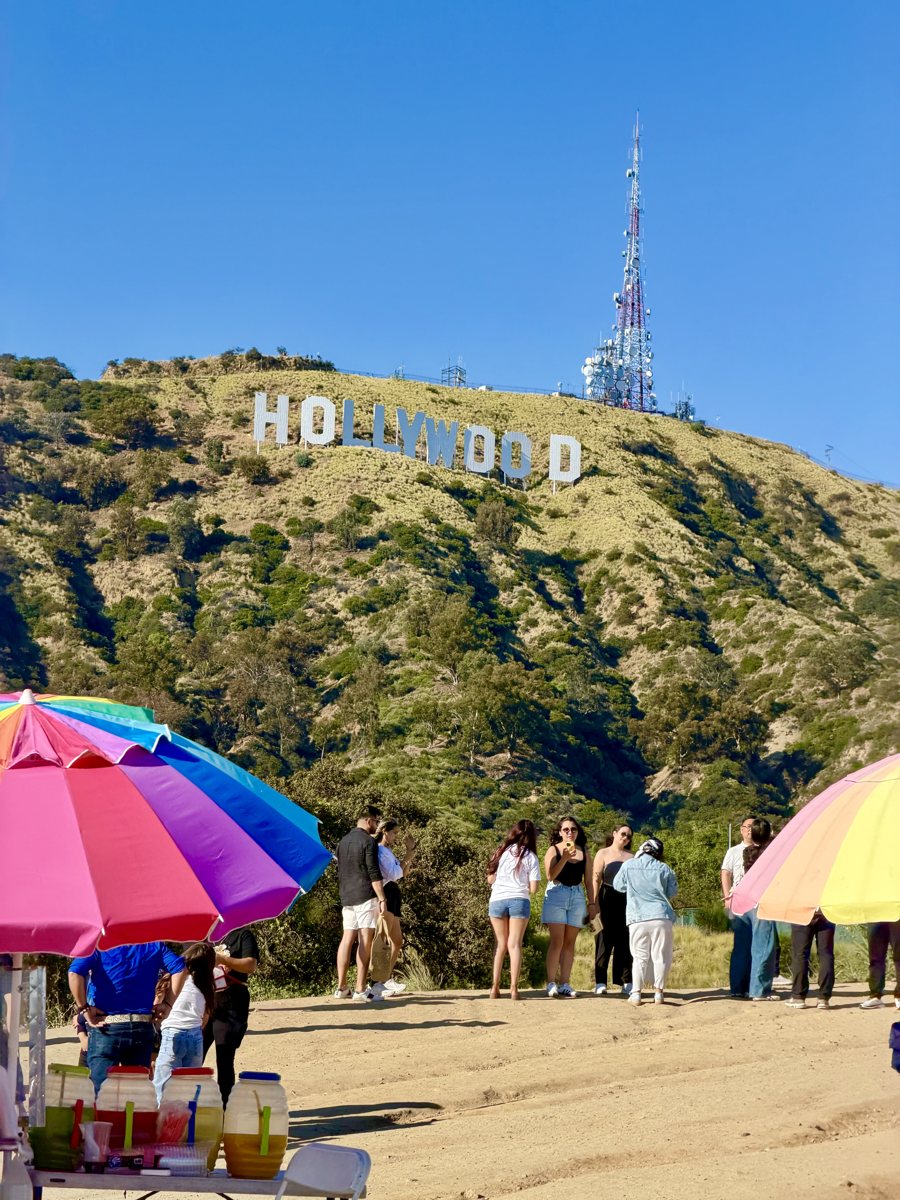
The sign is owned by the City of Los Angeles, sits in Griffith Park on Mount Lee, and turned 100 in 2023. It started as a billboard for a housing tract and became shorthand for the whole movie industry, and for the idea of coming to LA to chase a dream. It is the first thing most visitors want to see, and from almost anywhere in Hollywood, all you have to do is look up.